


MIGRATION AND
VIOLENCE

Assessing methods for measuring risk for migration among
youth due to violence in Honduras.

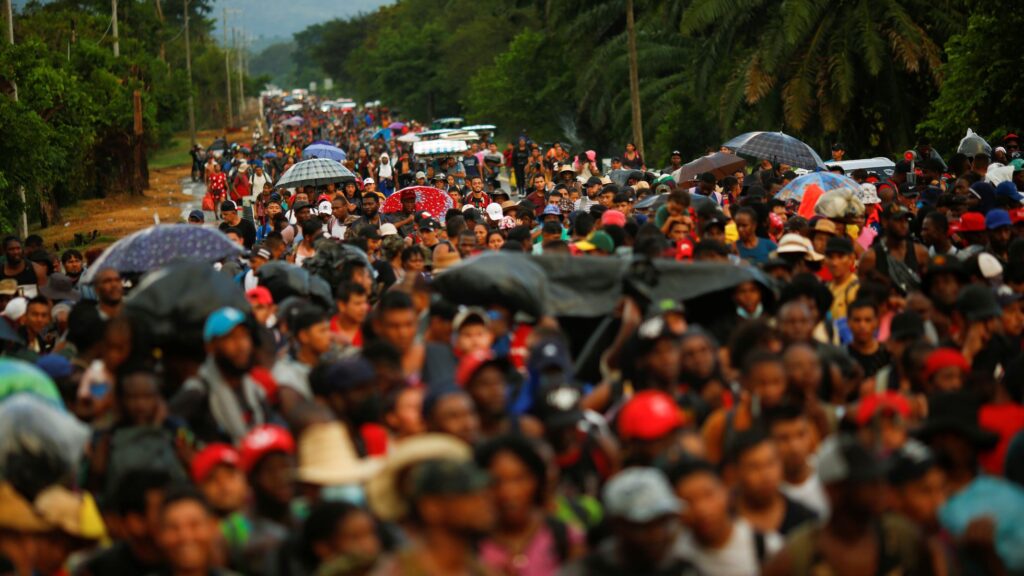
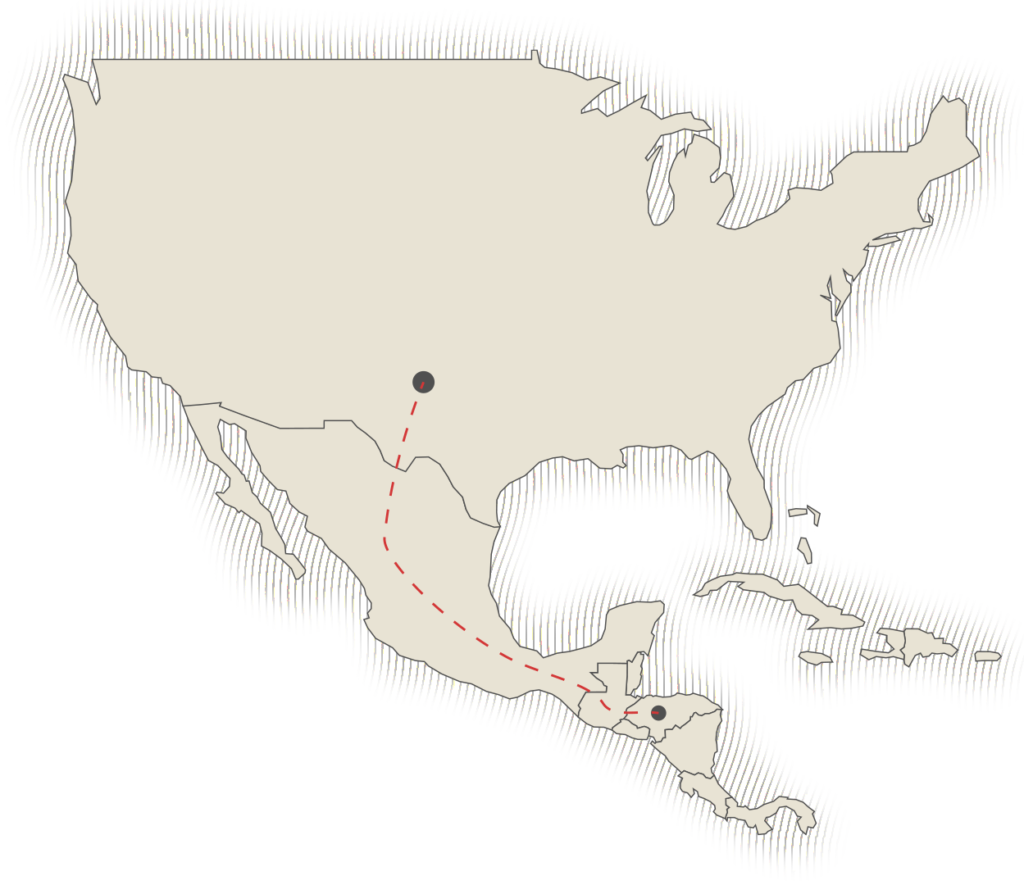
From 2019 to 2022, 835,012 Honduran migrants have been apprehended at the U.S. Southern Border. This would indicate that 1,142 Hondurans leave the country for the U.S. each day. In recent years, Hondurans have been one of the largest groups of migrants apprehended at the border.¹


1 in every 6 migrants apprehended at the U.S. border is Honduran²

46% of young people in Honduras between the ages of 18 and 29 years old have intentions to migrate

4 out of 10 men plan to migrate³

5 out of 10 women plan to migrate³

In 2020 39% of homicide victims were people between the ages of 18 y 18 and 29

91% of homicide victims were male

9% of homicide victims were female

Factors like violence, poverty, and family ties seem to be interconnected. But how exactly? And what role do these and other factors play in the decision to migrate?

A Theoretical Framework for Understanding Irregular Migration from Honduras

The Capabilities and Intentions Framework provides a systemic approach to assess the objective conditions, relationships, and characteristics that determine an individual´s or household’s capacity to migrate or stay (their capability), and how an individual or household perceives their future and life chances (their intentions).

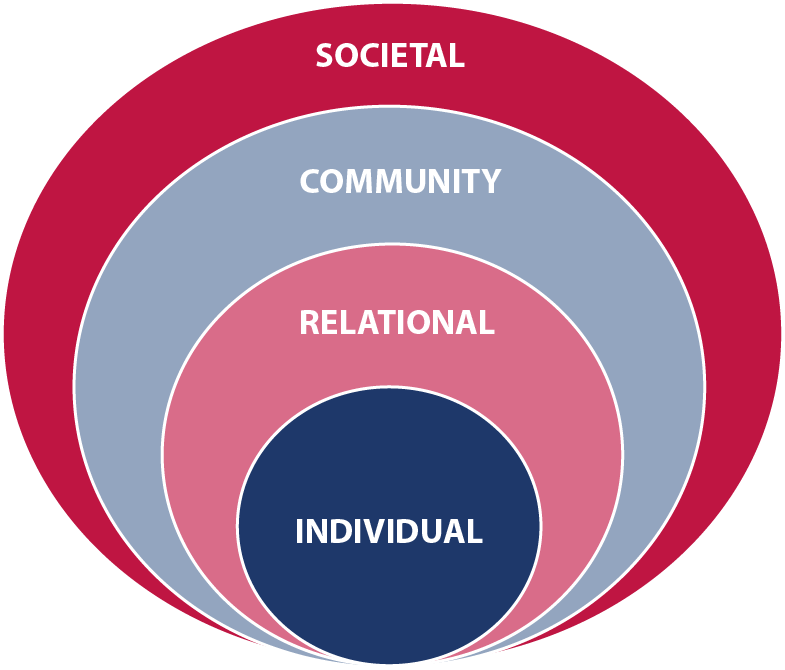
The socioecological model of human development helps us use these different levels.

We can analyze capabilities and intentions on different levels including individual, relational, community and structural.

A closer look at each level of the SEM

Identifies biological and personal history factors - such as age,
education, income, substance use, or history of abuse - that increase
the likelihood of becoming a victim or perpetrator of violence.

Examines close relationships that may increase the risk of
experiencing violence as a victim or perpetrator. A person's closest
social circle - peers, partners, and family members - influences their
behavior and contributes to their range of experience.

Explores the settings - such as schools, workplaces, and
neighborhoods - in which social relationships occur and seeks to
identify the characteristics of these settings that are associated with
risk of becoming a victim or perpetrator of violence.

Looks at the broad societal factors - such as health, economic,
educational, and social policies - that help create a climate in which
violence is encouraged or inhibited and that help maintain economic
or social inequalities among groups in society.
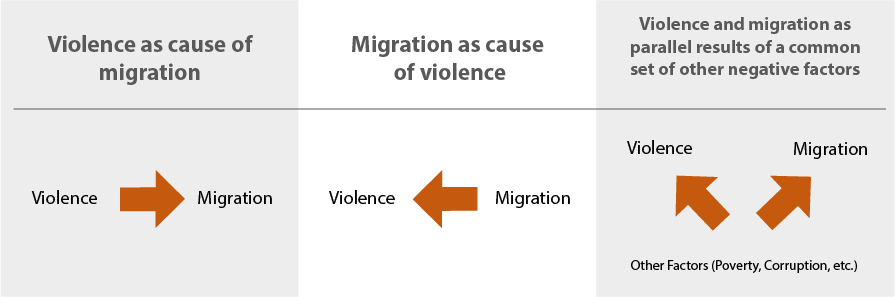
The Relationship between Violence and Migration

The figure below summarizes these three different ways of conceptualizing the relationship between violence and migration.

Violence and Irregular Migration from Honduras:
What the Data Says

We reviewed 35 quantitative studies focused on violence, internal displacement, or international migration in Honduras. The studies show that violence is just as powerful a factor motivating migration as economic adversity.

  • 53% of crime victims reported plans to migrate. This percentage is almost 15 percentage points higher than those who had not been a victim of crime
  • Nearly one-third of those who have considered migrating from Honduras have had a family member or close friend murdered
  • 61% of those who have considered migrating have been robbed on the street ⁷
  • Areas with high rates of extortion also experience high rates of migration ⁸
  • Women who had been victims of a crime in the past year and who intended to migrate were far more likely to report that they endured a wide variety of other negative experiences, including being victims of violence, extortion, or corruption, compared with women who did not report an intention to migrate ⁹
  • Migrant networks represent 30% of the variation in migration rates between different municipalities, compared to indicators of violence and migration which represent between 11% and 12% of the variation in migration rates by municipality. ¹⁰
  • Hondurans who both have been victims of crime and also have ties to migrant networks are around 20% more likely to report intentions to migrate, compared to those who report only one of those characteristics.¹¹
  • While 57.8% of people who were both non-victims of crime and had no intentions to migrate were satisfied with democracy in Honduras, only 42.5% of those who had been victims of crime and did intend to migrate were satisfied.¹²

What the Data Tell Us

Addressing Root Causes, Targeting the Most Vulnerable Communities, Households, and Individuals

Taking into consideration the Capabilities and Intentions Framework, as well as the review of quantitative studies, we recommend a tool and methodology to identify individuals, households, and communities at higher risk of being impacted by violence or migration.
There are several risk and protective factors at the individual-household and community levels that are connected to violence and migration. Risk factors are those that make someone more likely to migrate, protective factors are those that make someone more likely to stay.

There are several risk and protective factors at the individual-household and community levels that have been shown to be connected to violence and migration:

Risk Factors

Protective Factors

The best tool to assess the risk of violence and migration in Honduras is the Migration Propensity Index (MPI). This tool was previously used in Guatemala and identifies individuals and households likely to migrate based on 12 variables. The MPI:


    • Determines the intentions of individuals, households, and communities to migrate
    • Organizes factors into individual, community, and structural levels
    • Has been validated with rigorous statistical analysis
    • Has been applied in similar contexts to Honduras (Guatemala)
    • Is quick to calculate and measurement is relatively easy
    • Includes 5 of the 10 risk factors and 3 of the 9 protective factors identified in this study


The MPI serves as the basis for building a tool that can be used in Honduras. It should be adapted in the following ways to best fit the country and explain the factors which determine migration:


  1. Add new factors that measure the risk of violence and migration
  2. Use the risk and protective factors listed in this study as a starting point in terms of what to assess and monitor to understand more about the causes and consequences of migration
  3. Incorporate mechanisms for community feedback and result-sharing
  4. Develop in a way that is easy to use and repeat to improve monitoring
 

The recommended tool will successfully identify individuals, households, and communities that may need assistance in reducing their risk of violence and migration. This tool will also help decision makers identify how to best implement policies and interventions to reduce the impact of experiences that have left Honduran families with two difficult options: migrate and try to find a more promising future or stay and potentially become victims of violence or crime.

1 Congressional Research Service, 2021 – Apprehension data includes Title 42-related recidivism
2 Southwest Land Border Encounters, 2021
3 Creative Associates International, 2020
4 Observatorio Nacional de la Violencia, 2020
5 Hiskey et al, 2019 
6 Creative Associates International, 2020
7 Creative Associates International, 2020
8 CONADEH, 2019
9 Hiskey, Cordova, Malone, & Orces, 2021
10 Danielson, 2020
11 Cordova and Hiskey, 2019
12 Hiskey et al, 2021